
A Simple Introduction to Content Marketing Strategy
In the extremely competitive digital environment today, making any considerable impact is key for small businesses. This can only be achieved if they can be heard loudly and clearly in the digital noisemaking. A small business’s content marketing strategy has proven to be one of the best ways to achieve that level of impact. A well-planned content strategy would enable businesses to reach their target audiences, create trust with them, and secure continued engagement.
So what is the content marketing strategy?
It is a planned approach in which valuable and relevant content is developed, published, and distributed to engage the audience to continuously influence profitable customer action, for example, making a purchase, signing up for a newsletter, or becoming a follower of your brand. Note that the key is providing value first and building strong relationships with potential customers.
Why Small Business Should Implement a Content Strategy
A small business faces unique challenges in brand visibility, customer retention, and engagement; therefore, all the more reason to have a well-structured content marketing strategy in place.
Cost-Effective Approach: Unlike advert advertisement that incurs a huge cost, content marketing is relatively inexpensive, but will give far-reaching benefits in the long term.
Establishes brand authority: Quality content establishes authority for a company or organization in its niche.
Better the search flow and the organic search traffic: Blogs, videos, and social media posts affect one another as well as other content and, together, improve the website’s search ranking.
Promotes customer engagement: Valuable content inspires trust and a sense of belonging toward the brand.
More conversions: Knowledge-based content leads customers through their buyer journey.
Educates: Spreading consumer education helps ensure customers make informed purchases.
Enhances customer loyalty: Consistent high-quality content keeps your customers brewing back for more.
Importance of Content Strategy in Small Business
In a small business, resources are limited, and that means that time and effort should be spent prudently. Here’s why it is essential to put in place a content strategy:
Consistent Branding: Ensures a brand’s voice and message across all platforms is consistent.
Targeting: By focusing on the right audience, the generated content speaks to them much more than throwing around marketing budgets.
Resourceful: You won’t have to throw money at random marketing efforts.
Customer Trust: Quality content builds the desired credibility for establishing trust.
Long-Term Business Growth: Acts as a source of constant traffic and engagement that subsequently increases sales.
Competitive Advantage: Allowing a business to get ahead of their competitors who might not have a considered content approach.
Add a little spice or visual to make reading interesting.
How to Start a Content Marketing Strategy for Your Small Business:
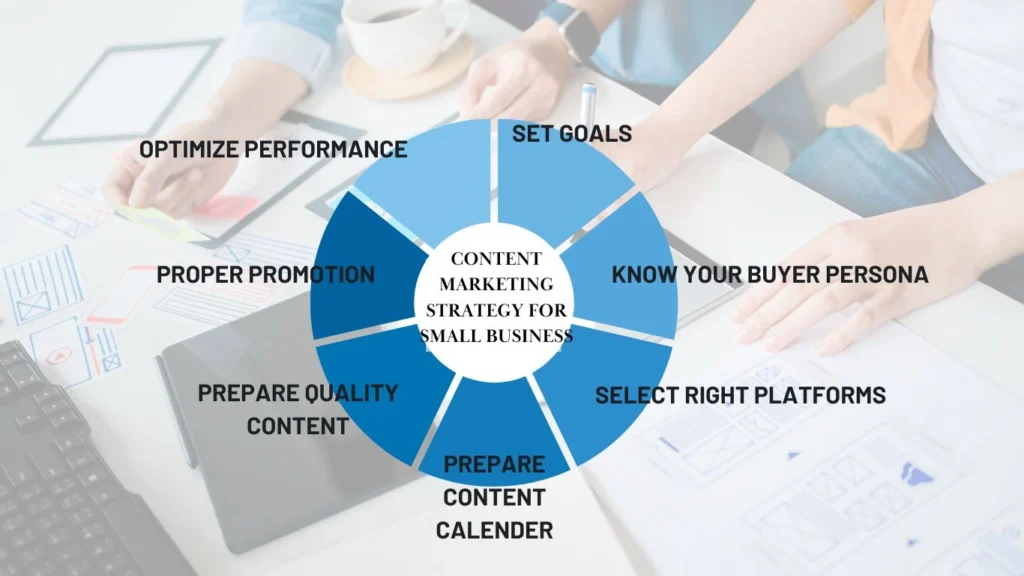
To begin with, Set Goals Once you have some content in mind, you should craft your goals. They could be boosting traffic to your website, generating leads, better social media engagement, enhanced brand awareness, or improving customers’ education.
Then, Know Your Buyer Persona. A buyer persona is a detailed description of your ideal customer. In constructing yours, consider:
- Demographic information: Age, gender, residence, and income.
- Customer pain points and challenges.
- What they are interested in and which content format they prefer.
- Review competitors to see what works in your industry.
- Conduct surveys and interact with customers to know their points of view
Choose the Right Content Types.
Every business will have different types of content that appeal to them. Generally accepted examples include:
- Blog Posts: Educational articles that serve SEO purposes.
- Videos: How-to guides, behind-the-scenes videos, or product demos.
- Infographics: Visual content easy to read.
- Podcasts: Good conversations for the niche community.
- Social Media Posts: Short bites of content so they can be easily shared on platforms.
- Email Newsletters: Unique updates, feedback, or business promotion.
- E-books & White Papers: Content for in-depth lead generations.
Select the Right Platforms.
Which communications channel is best to use for marketing your content? This is important to your success. These are the best platforms for content marketing strategy for a small business:
- Website & Blog: The central hub for content and SEO.
- Social Media: Facebook, Instagram, LinkedIn, Twitter, and TikTok.
- YouTube: Video content marketing suited best.
- Email Marketing: Direct communication with prospective customers.
- Podcasts: Growing popularity among niche audiences.
- Quora & Reddit: Good for establishing authority via discussions.
- Pinterest: The best platform for visually-driven businesses like fashion and home decor.
Prepare a Content Calendar
With a content calendar, you can ensure consistency. Provide content plans, at least 1-3 months in advance, by considering some of the following:
- Posting frequency
- Trends pertaining to seasons
- Occupational difficulties faced by customers
- News updates in your field
- Key occasions and events relevant to your business segment
Prepare Quality Content
Some of these best practices include:
- Ensuring your content is informative and adds value to the reader.
- SEO optimization (readable keywords, subheadings, good meta descriptions).
- Making the content lively (incorporating visuals, videos, and interaction).
- Keeping the content language simple and easy to read.
- Using storytelling techniques to make content more appealing and easy to relate to.
- Make it mobile-friendly! A huge percentage of users will consume content through mobile devices.
By focusing on proper promotion of your content, there is no way other than to reach the right audience which will entail enhanced engagement and scaling vision. Some key ways of doing it:
- SEO Optimization– Promotes search engine optimizations to immobilize the promises of Google-like engines, which have a high ranking in terms of findability. Conducts advanced searches, organizes meta descriptions, optimizes the interconnectedness, and ensures that the content inclusion is on point.
- Social Sharing:Include Instagram, LinkedIn, and Facebook in order to share your work. This can achieve even greater reach and engagement provided that posts are made weekly along with some strong captions and frequent usage of hashtags.
- Email Automation:Build an email list properly to ensure the newsletters which could link directly to the latest content sent out that are personalized. It is best to use automation tools for queue emails and track their performance.
- Paid Promotions: Invest directly or indirectly in Google Ads, Facebook Ads, and Instagram promotions, targeting very specific demographics- Elite Attractors for enhanced reach.
- Influencer Collaborations:Collaborate with influencers in your niche to augment brand awareness and reliability.
- Community Involvement:You can be involved with Facebook communities, forums, and online communities to furnish thoughts and share in discussions around industry-related stuff to establish authority.
Measure and Optimize Performance
Monitor your content performance using analytic tools:
- Google Analytics: Tracks website traffic and engagement.
- Facebook and Instagram Insights: Tracks social media.
- SEO Tools (SEMrush, Ahrefs): Makes you analyze keyword rankings and backlink portfolios.
- Email performance metrics: Track the open and click rates to see how effective your email marketing was.
- A/B Testing: Test different content formats and promotional methods to find what works.
Use the data to keep changing your content strategy so that it continually improves.
What small businesses benefit from content marketing?
Small business content marketing can work within almost every niche industry. E-commerce stores? Think product blogs, video tutorials, and user-generated content. Restaurants and cafés? Recipe videos, food blogs, and Instagram marketing work well for this industry. Local service businesses? Think educational blog posts, YouTube guides, and local SEO. Coaching and consulting revolve around webinars, podcasts, and social media Q&As. Freelancers and agencies? Case studies, portfolio blogs, and LinkedIn networking will work for this niche. For healthcare and wellness, think educational articles, fitness guides, and wellness tips. For real estate and property management: virtual tours, industry updates, and tips on home buying.
A successful content marketing strategy can be a driving force for organic traffic generation for the small business, increased brand awareness, and increased sales without making exorbitant amounts of money on advertising. Once you define your goals, understand your audience, choose the right platforms, and create the right valuable content, you’re in for the ride of a lifetime.
So if you’re a small business wanting to kick-start with content marketing, start thinking about it and scale up with the help of digital marketing strategist.
Sreesla VS